
Biomimicry Product Development Consulting: How Nature-Inspired Design Creates Smarter, Sustainable Innovations
7/20/20267 min read
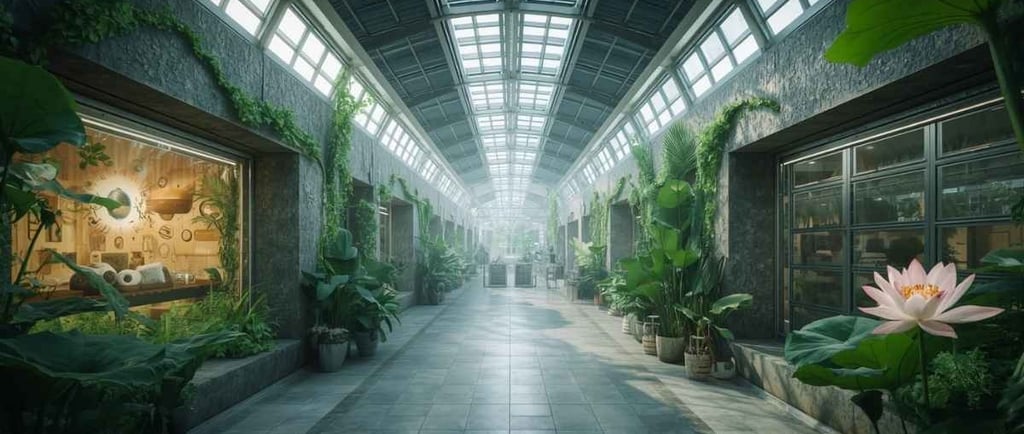

Introduction to Biomimicry and Its Importance
Biomimicry is an innovative approach that draws inspiration from natural systems, processes, and elements to address complex human challenges. This concept is underpinned by the idea that nature, through millions of years of evolution, has developed optimized solutions that are often more efficient and sustainable than traditional human innovations. As the world faces pressing issues such as climate change, resource depletion, and environmental degradation, integrating biomimicry into product development becomes increasingly significant.
The relevance of biomimicry extends into various fields, including technology, architecture, and manufacturing. In product development, designers and engineers look to nature for innovative ideas that promote sustainability and enhance functionality. For example, the structure of lotus leaves inspires self-cleaning surfaces, while the intricate design of termite mounds informs energy-efficient building temperature regulation. Techniques borrowed from nature lead to eco-friendly designs that not only meet human needs but also align with the principles of sustainable development.
Furthermore, biomimicry fosters a deeper connection between humans and the natural world. This relationship encourages an understanding of the interdependence between ecological systems and human impact. As we explore nature's blueprints, we become more aware of our role within ecosystems and the importance of preserving biodiversity. Implementing biomimetic designs helps mitigate the detrimental effects of industrialization while promoting a harmonious balance with the environment.
By prioritizing nature-inspired innovation, developers can create products that are not only effective but also responsible. Biomimicry presents an opportunity to rethink contemporary design paradigms, leading to solutions that are rooted in ecological intelligence, thereby benefitting both human society and the planet.
Understanding Biomimicry Consulting Services
Biomimicry consulting services play a crucial role in guiding organizations through the intricate process of integrating nature-inspired solutions into product development. These consulting services encompass a wide range of offerings aimed at fostering innovation and sustainability in various industries. One of the primary services provided by biomimicry consultants is research. This involves studying natural systems and processes to uncover principles that can be applied to human challenges. Through extensive analysis of biological structures, behaviors, and ecosystems, consultants can identify strategies that promote efficiency, resilience, and environmental harmony.
Another essential service is product ideation. During this phase, consultants facilitate brainstorming sessions that encourage creative thinking, focused on deriving ideas and concepts from nature. Clients are supported in visualizing how bio-inspired elements can be woven into their existing product lines or manifest in entirely new offerings. This collaborative approach not only cultivates innovation but also empowers organizations to make informed design choices that resonate with sustainable practices.
Design support is another key aspect of biomimicry consulting. Consultants assist teams by providing insights into material selection, product functionality, and aesthetic appeal grounded in nature’s time-tested solutions. By leveraging natural models, organizations can create products that are not only efficient but also environmentally friendly, thereby elevating their market competitiveness.
Lastly, sustainability assessments are an integral part of these services. Consultants evaluate the environmental impact of proposed products, ensuring that they meet regulatory standards and corporate sustainability goals. This process helps organizations identify areas for improvement and guides them towards a more sustainable innovation approach. By employing these comprehensive biomimicry consulting services, organizations can effectively incorporate bio-inspired elements into their product lines, enhancing both sustainability and innovation in their offerings.
Case Studies: Real-World Applications of Biomimicry
Biomimicry, the practice of emulating nature's designs and processes, has led to several groundbreaking innovations across a variety of industries. This section highlights some notable case studies where biomimicry has significantly influenced product development.
One of the most famous examples is the **lotus effect**, whereby the leaves of the lotus flower exhibit self-cleaning properties due to their micro-structured surfaces. This natural phenomenon has inspired the creation of self-cleaning surfaces, applicable in various fields such as architecture and textiles. Products designed with the lotus effect can maintain cleanliness with minimal maintenance, demonstrating a practical application of biomimicry in everyday life.
Another compelling instance is the development of **gecko adhesives**, which mimic the unique foot structure of geckos known for their ability to climb vertical surfaces. These synthetic adhesives have broad applications, particularly in the medical field for surgical adhesives. The gecko-inspired technology provides a robust and reusable adhesion system, showcasing how biomimicry can enhance functionality in product design.
The **sharkskin technology** is yet another innovative example derived from the texture of shark skin, which reduces drag and prevents the growth of algae and barnacles on ships. This biomimetic approach has been successfully applied in coatings for marine vessels and sports equipment, optimizing performance while reducing the need for chemical anti-fouling agents, thus contributing to environmental sustainability.
Lastly, the use of **spider silk** in engineering highlights the potential of biomimetic materials in creating lightweight yet durable products. Spider silk, known for its strength and elasticity, has been adopted in biomedical applications, such as sutures and prosthetics, demonstrating how biomimicry can lead to innovations that improve user outcomes in healthcare.
These case studies represent just a fraction of the profound impact of biomimicry in product development, illustrating how an understanding of natural processes can inspire creative solutions that address complex human challenges.
Benefits of Biomimetic Engineering and Nature-inspired Innovation
Biomimetic engineering, which draws inspiration from nature to solve complex human problems, offers a multitude of advantages that significantly impact product development and environmental sustainability. One of the primary benefits is the reduced environmental impact associated with biomimetic products. By studying natural processes and structures, designers can create solutions that minimize waste production and resource consumption, promoting a more sustainable approach to manufacturing.
Furthermore, nature-inspired innovation enhances efficiency in product design. Many organisms have evolved to utilize energy and resources in optimal ways, and by mimicking these strategies, engineers can develop products that require less energy, thereby reducing operational costs and carbon footprints. For instance, the design of energy-efficient buildings has often been inspired by the natural ventilation strategies seen in termite mounds, leading to lower energy needs for heating and cooling.
Improved product performance is another significant benefit of biomimetic engineering. Products developed with inspiration from nature tend to exhibit superior durability, functionality, and adaptability. For example, the creation of self-cleaning surfaces inspired by lotus leaves has revolutionized cleaning technologies, offering long-lasting and efficient alternatives to traditional cleaning products. Such innovations demonstrate how nature provides effective templates for creating high-performance materials that align with the principles of a circular economy.
Moreover, the role of nature-inspired innovation extends beyond mere aesthetics; it emphasizes the integration of eco-friendly materials. By adopting biodegradable or sustainable materials modeled after natural compositions, companies can foster a design culture that values ecological balance. This shift not only leads to more responsible product lifecycles but also aligns with consumers’ increasing demand for environmentally friendly options. Adopting biomimetic strategies paves the way for future innovations that promote sustainable living without compromising functionality and performance.
Biomimicry, while innovative and promising, presents several challenges in its application to product development. One of the most significant hurdles is technological limitations. The transfer of biological principles into functional products often requires advanced technologies that may not yet exist. This gap can hinder designers from fully realizing the potential of nature-inspired solutions. As research progresses, it is essential for technologies to evolve, enabling more practical applications of biomimicry concepts.
An additional challenge lies in the extensive preliminary research required before embarking on biomimetic design. Understanding the biological systems that serve as inspiration necessitates significant time and resources to study various organisms and their ecosystems. This developmental phase is crucial, yet it can be prohibitively expensive for smaller organizations or start-ups wishing to engage in biomimicry. Collaborating with research institutions or tapping into existing scientific literature may provide pathways to overcome these financial and time constraints.
Furthermore, the complexity of translating biological systems into industrial applications cannot be underestimated. Biological systems are often intricate, with many interdependent components working seamlessly together. Replicating these systems in a way that is both functional and efficient poses an additional challenge. To effectively address this, product developers must adopt a multidisciplinary approach, integrating insights from biology, engineering, and design. Utilizing simulation tools and prototyping methods can facilitate the translation of biological concepts into product features, ensuring that solutions are effective and viable.
Ultimately, while challenges in biomimicry product development are significant, they are not insurmountable. By leveraging technological advancements, fostering interdisciplinary collaboration, and dedicating resources to research, designers can facilitate the incorporation of biomimicry into their practices, paving the way for innovative, sustainable products that draw inspiration from nature.
Evaluating ROI in Sustainable Product Development
The evaluation of return on investment (ROI) in sustainable product development, particularly through the lens of biomimicry, represents a pivotal aspect of modern innovation strategies. Biomimicry, by emulating nature’s time-tested patterns and strategies, not only enhances product functionality but also promises substantial economic benefits. Understanding the ROI involves examining various metrics that encapsulate sustainability impacts, customer acceptance, and market benefits.
First and foremost, the sustainability impacts of products developed through biomimicry can be quantitatively assessed through life cycle assessments (LCAs). These assessments provide insights into material sourcing, energy consumption, and waste management, thus allowing companies to compute potential cost savings over the product’s lifespan. This insight serves as a baseline for comparison against traditional manufacturing methods, which often reveal higher resource consumption and environmental degradation.
Furthermore, customer acceptance plays a crucial role in determining the ROI. Products that successfully integrate biomimetic designs tend to resonate well with eco-conscious consumers. Surveys and market research data can be instrumental in understanding how sustainable design influences purchasing decisions, which can subsequently be linked to increased market share and enhanced brand loyalty.
The market benefits can also be illustrated through comparison tables that showcase ROI differentials between conventional products and those developed with biomimetic principles. Such tables can highlight dimensions such as costs, sustainability ratings, customer feedback scores, and potential profit margins. For instance, a product modeled after a natural prototype might yield lower production costs and higher durability, ultimately resulting in a more favorable ROI when juxtaposed with its traditional counterpart.
In conclusion, evaluating the ROI in sustainable product development through biomimicry requires a comprehensive approach that considers multiple metrics. The holistic assessment not only promotes sustainability but also establishes a strong business case for adopting biomimetic strategies, driving forward the future of responsible innovation.
Actionable Checklist and Expert Insights
Embarking on a journey of biomimicry in product development can be both challenging and rewarding. To facilitate this process, companies can follow a structured checklist that outlines essential steps to incorporate biomimicry effectively. Firstly, it is important to identify the specific problems or challenges that the product aims to address. Conducting a thorough analysis of these challenges ensures that the subsequent solutions are targeted and relevant.
Next, companies should engage in extensive research to understand biological systems that have evolved solutions to similar challenges. This research phase is crucial, as it can lead to innovative ideas that are not only efficient but also sustainable. Collaborating with biomimicry experts or consulting firms specializing in this area can enhance the research output and provide valuable insights.
The prototyping phase involves translating biological insights into tangible products. Companies should create prototypes that reflect the findings from the research and test these iterations rigorously to refine their designs. It is essential to incorporate feedback from all stakeholders throughout this process to ensure that the final product meets market needs effectively.
Expert opinions highlight the importance of fostering an organizational culture that embraces experimentation and innovation. Companies should encourage cross-disciplinary collaboration, allowing teams from different backgrounds to contribute diverse perspectives, which is vital for successful biomimicry applications.
FAQs surrounding biomimicry commonly include questions about its costs and time requirements. While initial investments may appear significant, the long-term benefits often outweigh these concerns due to enhanced efficiency and sustainability. Additionally, misconceptions regarding biomimicry being an exclusive practice for specific industries are unfounded; in reality, any sector can leverage biomimetic principles for innovation.
Animal Kingdom Science
Translating 3.8 billion years of evolutionary intelligence into production-ready blueprints.
SITEMAP
Home
Expertise
Industries
Contact
R&D INQUIRIES
info@animalkingdomscience.sbs,momin0710@yahoo.com
Technical Consultation Office
Response within 24 hours
© 2026 Animal Kingdom Science-Scientific translation of biological mechanics into industrial solutions. only What's app +8801723057746 Imo 24/7 Hours Support
3.8 BILLION YEARS OF R&D